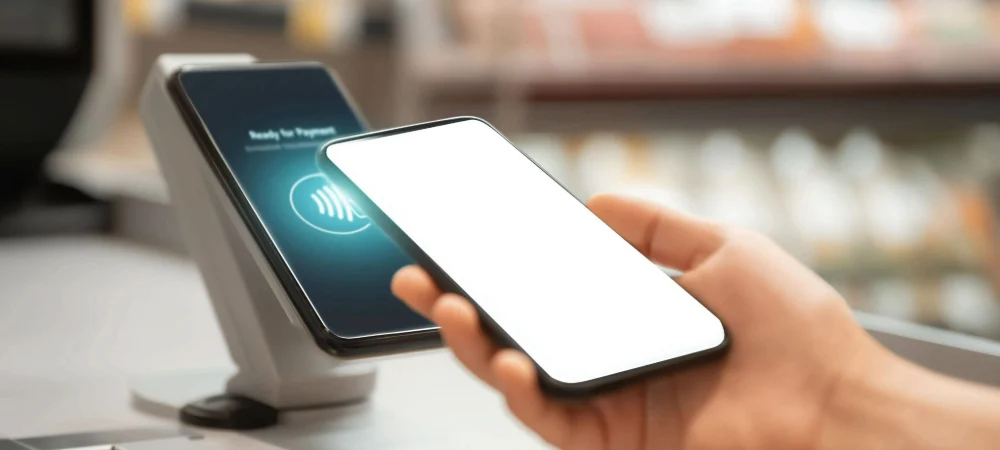
Alan Moss, General Manager, Europe, Newland NPT, examines the physical technology underpinning increasingly seamless retail payments and why effective terminal management remains critical as payment environments evolve.
Retail payments can look increasingly invisible to the customer. A tap of a card, a mobile wallet transaction, a refund, a queue-busting checkout or a self-service payment can feel like a tiny moment at the end of a purchase.
For retailers, that moment depends on a physical layer of technology that still has to work every time. The payment terminal may not attract the same attention as apps, platforms or new payment methods, but it remains one of the most important pieces of infrastructure in the store.
The European Central Bank’s payments statistics for the first half of 2025 put the euro area at around 24.7 million point-of-sale terminals, 24% more than a year earlier. As contactless acceptance becomes part of everyday retail and hospitality, more of the in-store payment experience now depends on this hardware working well.
Behind those numbers is a large and varied estate of payment hardware. It turns up in high-volume supermarkets, smaller retail sites, hospitality venues, pop-ups, concessions, self-service areas and assisted-selling environments. The setting changes, but the expectation does not. The customer wants to pay without delay and the retailer needs the sale to keep moving.
The fixed point in a changing checkout
Retail payments have become more digital, but the store still needs a dependable point of completion. The terminal is where the customer confirms the payment, where staff see whether the transaction has gone through and where the business depends on the acceptance layer to perform under real trading conditions.
That gives the terminal estate a role beyond ordinary equipment. Once devices are installed across a network, they remain in place while other parts of the payments environment change around them. New payment methods emerge. Processors and acquiring relationships may change. Store systems become more connected. Compliance requirements develop. Customer expectations keep rising.
Through all of this, the terminal still has to process transactions every day. It has to work during peak trading periods, long opening hours and the everyday pressure of a busy shop floor.
That dependability is what gives payment hardware its lasting value. It creates a foundation on which other changes can be introduced, provided the estate is properly managed.
When reliability needs attention
A terminal estate can work reliably for years, but that does not mean it can be left to look after itself. The longer devices stay in service, the more important it becomes to keep track of software, updates, certifications and support.
Security standards change. Software needs to be updated. Certification requirements evolve. Retailers may add new services, new integrations or new payment methods. Without clear ownership, a dependable estate can gradually become harder to manage.
This can show up in small but costly ways. A security update takes longer than expected because device records are inconsistent. A processor change becomes more difficult because configurations vary across stores. Certification work is delayed because teams need to understand which versions are deployed and where.
These problems do not always stop trading immediately. That is partly why they can be underestimated. The estate appears to be working, but each future change requires more manual checking, more coordination and more operational effort.
A well-managed terminal estate avoids that pattern. Clear ownership, accurate estate data and planned update processes help payment infrastructure remain dependable while still supporting change.
Different stores need different payment setups
Retail is not built around one type of checkout anymore. A supermarket lane, a hospitality table-service payment, a compact service counter and an unattended kiosk all create different payment demands.
Fixed terminals are well suited to high-throughput checkouts. Mobile devices can support assisted selling, queue management and service away from the main till. Compact devices may fit smaller counters, concessions and pop-up locations. Self-service and attended environments often sit alongside each other in the same retail operation.
That variety is not a weakness. It reflects the way stores now operate. Retailers are designing payment acceptance around function, space, staff workflows and customer behaviour rather than forcing every environment into the same model.
The important part is coordination. Different device types may carry different support needs, update cycles and certification requirements. When that variety is managed well, stores can operate predictably across different formats. When it is not, the payment estate becomes harder to adapt as the business grows.
The work behind smoother payment experiences
The customer sees the payment moment. The business has to manage everything behind it.
Updates need to be introduced without disrupting trade. Compliance and certification work needs to stay current as configurations change. Support teams need visibility across the estate. Platform decisions made at rollout continue to shape how easily future changes can be introduced.
This is where strong execution matters. Some retailers can introduce updates, integrations or new acceptance requirements with limited disruption. Others find that similar work takes longer because the estate depends too heavily on manual processes, informal knowledge or ageing configurations.
The difference is not simply the hardware selected at the start. It is how the estate is run over time. Good payment infrastructure gives teams confidence that change can be planned, tested and introduced without putting day-to-day trading at risk.
Why the pressure is growing
Europe shows these pressures clearly. Card and contactless usage are embedded in everyday spending, while customers have little patience for checkout disruption. At the same time, payment acceptance has to support security, oversight and traceability.
Markets such as Germany, Austria and Switzerland bring those expectations into sharp focus. Privacy standards are strong, oversight is detailed and inconsistency at the checkout is noticed quickly. Short-term fixes tend to show their limits when store networks grow and requirements become more demanding.
Similar patterns are appearing elsewhere. In North America, large terminal estates and evolving security frameworks are increasing attention on lifecycle management. In parts of Asia-Pacific, retailers may need to support cards, wallets and QR payments within the same footprint, adding further operational and certification demands.
The common thread is that payment acceptance is being asked to support more variety and more change, while still feeling simple to the customer.
The infrastructure beneath connected retail
Retail payments will keep changing. Software, data, orchestration and new ways to pay will all influence how retailers serve customers.
Even so, in-store payments still need a dependable point of completion. The terminal remains where the promise of a smooth payment experience is tested. It is where digital payment expectations meet the reality of the shop floor.
Retailers that manage terminals as part of their long-term infrastructure will find it easier to keep payments reliable as requirements change. The device may sit quietly on the counter, but the work behind it affects how confidently stores can trade, grow and adapt.